
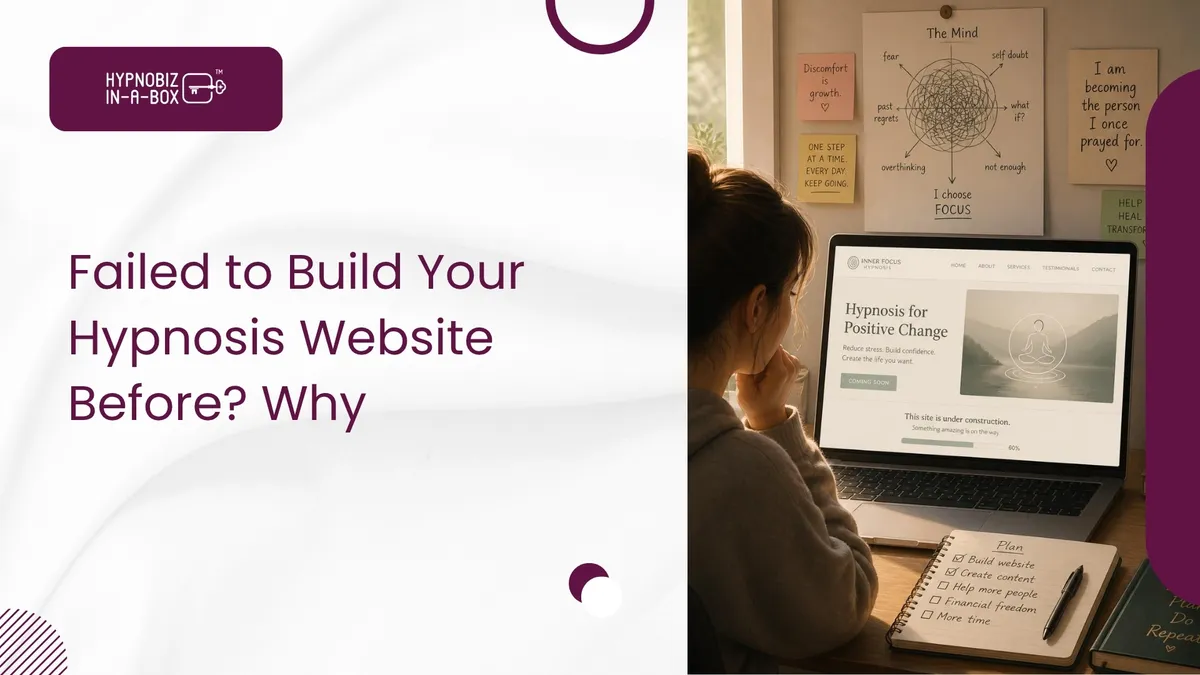
Tried and Failed to Build Your Hypnosis Website Before? Here's Why It Wasn't Your Fault
A website built before the message is clear gets rebuilt eventually, sometimes more than once. The failure was never a technical one.
Most practitioners who struggle to get a website live are not struggling with technology. They are sitting in front of a blank template with nothing clear to put into it, because the message, offer, and ideal client were never worked out before the build started. That sequence is the problem. Not the platform, not the design, not the practitioner.
If you have started over more than once, it is easy to quietly decide you are the problem. You are not.
Create Before You Implement
Most website attempts start with a template and a blank page asking what to write. Without a clear message, offer, and ideal client already defined, that blank page stays blank, or fills up with generic language borrowed from a dozen other practitioner sites.
The result is a site that looks like it could belong to anyone in the wellness space: vague descriptions of hypnosis, general claims about change, a booking button that never gets clicked. The design is fine. The substance underneath it is missing entirely.
Clarity before technology is not a preference. It is the actual sequence that determines whether a website does anything useful once it's live.
Where the First Attempt Usually Breaks Down
The pattern is consistent across practitioners who have tried and abandoned a website build:
The message was borrowed, not built from your own specific practice and client base. Generic language about hypnosis in general does not give a specific person a reason to book with you specifically.
The offer was vague, describing hypnosis in general instead of what you specifically help with. A visitor reading "I help people achieve their potential" has no idea whether you work with anxiety, smoking, sleep, performance, or something else entirely.
The build happened first, before the strategy behind it existed. The template was opened, the pages were built, and the question of what to say was deferred until it couldn't be deferred any longer.
None of those failures belong to the practitioner. They belong to a sequence that puts implementation before thinking. Google's own guidance on helpful, people-first content points the same way: content written for a specific reader serves visitors and search better than generic filler.
What the Right Order Actually Produces
When the message comes first, the website has something specific to say on every page. The homepage speaks to a recognizable person with a recognizable problem. The about page explains why you specifically are positioned to help with that problem. The service page describes an outcome, not a modality.
A site built that way converts because the visitor can place themselves in it immediately. They read the headline and recognize themselves. They read the offer and understand what they're considering. The booking step feels like a natural next move rather than a leap of faith, especially when appointment booking is built right into the experience.
Once someone books, automated client follow up keeps the connection going without extra work from you. And a site built this way is far easier to get found, which is where SEO services for hypnotherapists come in.
That clarity does not come from the template. It comes from the work done before the template is ever opened.
The Right Order
The HypnoBiz Success Blueprint builds your message and offer first, then your website from that clarity. No blank template, no guessing what to say. The site gets built once, in the right order, from your own answers instead of someone else's guess.
The 10 guided AI Experiences inside the HypnoBiz Success Blueprint produce that clarity before any technical work begins. By the time the website build starts, the message is defined, the offer is specific, and the ideal client is clear. The build is the easy part.
Frequently Asked Questions
Why do so many hypnotherapists struggle to build their own website?
Because the website is usually attempted before the message and offer are clear. Without that clarity, even a well-designed template stays generic, since there is nothing specific yet to put into it.
Is it normal to try and fail at building a hypnosis website more than once?
Yes, and it points to sequence, not skill. Building the site before clarifying the message and offer means rebuilding later once that clarity finally exists.
What should come before building a hypnotherapy website?
A clear message, a specific offer, and a defined ideal client. Those three answers shape everything the website needs to say.
Do hypnotherapists need a custom website, or are templates good enough?
A template built from your own clarity, your message, offer, and ideal client, works well. A generic template with no connection to that clarity rarely converts, regardless of how polished it looks. If you want a strong starting point, hypnotherapy website templates work best once your message is already defined.
What's the most common technical mistake hypnotherapists make building a site alone?
The bigger issue usually is not technical. It is building the site before the underlying message and offer are clear, with no amount of design skill fixes.
How is a done-with-you website setup different from a DIY website builder?
A done-with-you setup builds the site from clarity work completed first, with real support along the way. A DIY builder hands over a blank template and leaves the message, offer, and structure entirely up to you. If you want the team to build alongside you, Foundations to Scale is designed for exactly that.
Build It Once, in the Right Order
The website is not the starting point. The clarity is. A site built on that foundation gets built once and actually works.
Watch the demo and see how the message gets built before the website does, or start your 7-day trial and begin with the Blueprint today.


